



Selection Guide for Sterilization-Compatible Tubing
Choosing Tubing Materials for Autoclave, Gamma, and ETO Compatibility
Sterilization is not an afterthought. For medical tubing, the ability to withstand sterilization without compromising mechanical integrity, biocompatibility, or appearance is essential. Whether a product is intended for reuse or arrives sterile in a single-use kit, the tubing must perform consistently after exposure to heat, radiation, or gas-based sterilants.
Choosing the right material can prevent costly failures: cracking after gamma exposure, leachables from ETO absorption, or dimensional change after repeated steam cycles. This post examines how autoclave, gamma irradiation, and ethylene oxide (ETO), and which material classes are engineered to endure them.
Understanding the Sterilization Methods
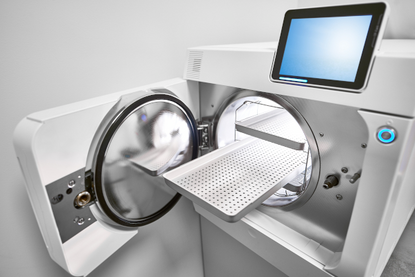
Autoclave (Steam Sterilization)
Autoclave processes typically operate at 121°C to 134°C under pressurized steam. Tubing must withstand high heat and moisture, often across multiple cycles, without swelling, deformation, or loss of mechanical strength. Materials that cannot tolerate thermal expansion or hydrolytic degradation may experience permanent changes in elasticity or surface finish.
Gamma Irradiation
Gamma sterilization uses high-energy photons to break down microbial DNA, but it can also cleave polymer chains. For some elastomers and plastics, this results in embrittlement, discoloration, or surface cracking. Radiation-stabilized formulations can help mitigate these effects, but compatibility must be verified, especially when multiple sterilization cycles are involved. At Saint-Gobain Medical we typically test our tubing after gamma irradiation (25-40 kGy).
Ethylene Oxide (ETO)
ETO is widely used for heat-sensitive components due to its low-temperature operation. However, some polymers absorb ETO and require extended aeration times to off-gas residuals. Regulatory limits for residuals (such as those outlined in ISO 10993-7) must be met to avoid patient exposure. Tubing materials must balance low permeability with complete sterilant penetration.
Material Selection: How Common Tubing Polymers Perform
| Material | Autoclave | Gamma | ETO | Notes |
|---|---|---|---|---|
| Silicone | ✓✓✓ | ✓ | ✓✓✓ | Excellent for steam and ETO. Gamma can reduce flexibility over time. |
| TPEs | ✓ to ✓✓ | ✓✓ | ✓✓✓ | Highly formulation dependent. Gamma-stable TPEs are ideal for single-use. |
Fluoropolymers (PTFE, FEP, PFA) | ✓✓✓ | ✓✓✓ | ✓✓✓ | Strong across all methods. Limited elasticity and higher cost. |
| Polyolefins (HDPE, PP) | ✓ | ✓✓ | ✓✓ | Cost-effective. Not ideal for steam applications. |
| PVC | ✓ | ✓✓ | ✓✓✓ | Common in ETO-sterilized sets. Plasticizer concerns are increasing. |
Scale:
✓✓✓ – Excellent compatibility; material maintains properties with minimal change
✓✓ – Good compatibility; may require validation or formulation adjustments for repeated exposure
✓ – Limited compatibility; performance degradation or physical changes likely, not recommended for repeated use
Silicone Tubing
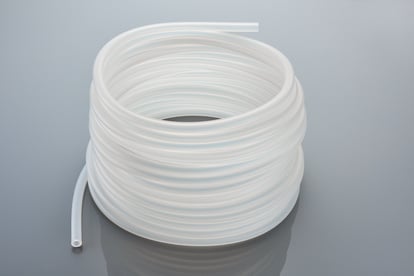
Silicone tubing is often the first choice for reusable medical devices. It maintains elasticity and dimensional stability across many autoclave cycles. It also works well with ETO and is accepted in implantable applications. Gamma irradiation, however, can cause embrittlement, especially in peroxide-cured grades or thinner-wall designs. Radiation-stabilized or platinum-cured formulations offer improved resistance but are still limited for repeated gamma exposure.
Thermoplastic Elastomer (TPEs) Tubing
TPEs cover a broad range of materials, including SEBS and TPU-based systems. With the right formulation, they offer flexibility, clarity, and good chemical resistance. Many are engineered for gamma compatibility, making them well-suited for pre-sterilized, single-use sets. Steam sterilization is more challenging. Some TPEs may deform, become tacky, or degrade over time depending on the grade and wall thickness.
Fluoropolymer Tubing
PTFE, FEP, and PFA perform exceptionally well under all three sterilization methods. They resist thermal degradation, radiation damage, and chemical attack. Their limitations include poor flexibility, high cost, and difficulty bonding or welding. These materials are often used where chemical resistance and absolute inertness are critical, rather than in dynamic fluid paths.
Polyolefin Tubing
HDPE and polypropylene are used in connectors, fittings, and some tubing due to their cost-effectiveness and gamma compatibility. Their low melting point and limited moisture resistance make them less suitable for autoclave. These materials can also be prone to stress cracking in high-load or dynamic environments.
PVC Tubing
PVC remains widely used in ETO-sterilized disposable sets. It offers a balance of clarity, flexibility, and cost. However, its use of plasticizers such as DEHP is under increasing regulatory scrutiny. Outside of one time sterilization, PVC is not recommended for steam sterilization due to thermal instability and the potential release of volatiles.
Designing to Fit Your Sterilization Strategy
Material selection should be based on sterilization requirements, device use case, and regulatory considerations.
Reusable surgical tools or implantables: Silicone is typically preferred for its resistance to steam and compatibility with ETO.
Single-use gamma-sterilized fluid paths: Gamma-stable TPEs or polyolefins provide flexibility and efficiency.
Chemically aggressive environments: Fluoropolymers are well suited when chemical resistance and sterilization compatibility are both critical.
ETO-sterilized infusion or drainage sets: PVC is commonly used, but the search for cleaner alternatives is increasing.
Aligning tubing material with the sterilization process early in product development avoids unnecessary redesign, simplifies validation, and improves device reliability.
Why Sterilization Strategy Matters in Tubing Design
Sterilization is not just a process step. It is a design constraint that directly impacts tubing performance, validation cost, and regulatory approval. Materials must be selected not only for function but also for how they respond to the physical and chemical stress of sterilization.
When engineers understand how different materials behave under autoclave, gamma, and ETO, they can make smarter choices that lead to safer, more reliable medical devices. Tubing that maintains its integrity through sterilization helps ensure consistent performance across every cycle and every patient. Discover the variety of Saint-Gobain tubing options available or consider a custom compound solution to meet your tubing needs.

Why medical tubing working pressure ratings can be misleading


Optimize performance with integrated design
