



Why Medical Tubing Working Pressure Ratings Can Be Misleading
When evaluating medical tubing, one of the first specs you’ll encounter is working pressure. On the surface, it sounds simple. But here’s the thing: that number is not always as comparable across manufacturers. And the reason comes down to something that’s rarely explained on a spec sheet: the safety factor.
What Is the Safety Factor and Why Does It Matter in Medical Tubing?
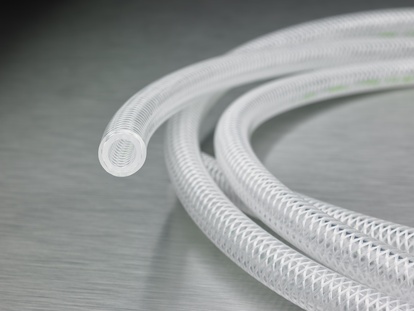
The safety factor is the ratio between the tubing’s burst pressure (the pressure at which the tubing will fail in testing) and the working pressure that gets published in the datasheet. In other words, it defines how much margin of safety is built between normal use and failure.
For example:
- A tube with a burst pressure of 500 psi and a 5:1 safety factor will be rated for 100 psi.
- Another tube with the same burst pressure but a 3:1 safety factor will be rated for 166 psi.
On paper, that second tubing looks stronger. But in reality, it is carrying a lower margin of safety. This is why working pressures are not always an apples-to-apples comparison.
The Problem with Comparing Numbers with Working Pressure
Many people don’t realize that safety factors aren’t standardized across the industry. Some manufacturers might use a 3:1 ratio, others 4:1, and some - like Saint-Gobain - will use a conservative 5:1 ratio. That difference matters. It affects not only how robust the tubing is but also how much trust you can place in the numbers.
The challenge is that most spec sheets don’t tell you what safety factor was used. You’re left comparing working pressures without knowing how much buffer is actually built in. That can lead to decisions based on numbers that don’t reflect the same risk profile.
Our Approach: A Conservative 5:1 Safety Factor
At Saint-Gobain, we apply a consistent 5:1 safety factor when publishing working pressures for our non-braided medical tubing. That means the rated working pressure is always one-fifth of the burst pressure we validate in testing. It’s a conservative approach by design because these products are used in critical settings where reliability matters.
What to Ask When Comparing Tubing
When you’re evaluating tubing, ask about the safety factor. Don’t assume that a higher working pressure always means a stronger or safer product. Make sure you understand how that number was calculated so you can compare products fairly and confidently.
To make informed decisions, ask these questions:
- What safety factor was used to calculate the working pressure?
- Is the burst pressure available for comparison?
- How does the tubing perform under real-world conditions?
The bottom line: Safety factors matter. And the difference is in the details when choosing safe, reliable medical tubing.

What it is and why it matters


What makes aging data credible, and what can quietly make it misleading.