





Compatibility of Tubing & Fittings in Medical Devices
Why System-Level Thinking Is Critical in Medical Tubing Design
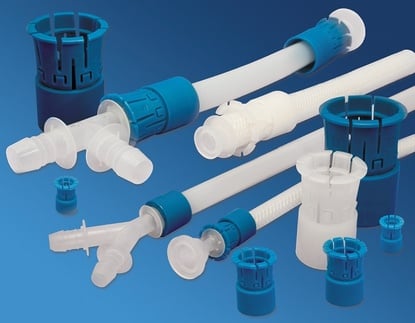
In medical device development, tubing and connectors are seen as mating components, where the interface between these components usually takes precedence in design decisions. Additional variables need to be considered. Selections such as chemical resistance, connection type, mechanical properties, and maintenance schedules, amongst others, must be considered at a system or assembly level. Overlooking this relationship introduces hidden risks, increases development costs, and can delay regulatory approvals.
It’s the practice of selecting tubing and fittings as an integrated unit, considering chemical, mechanical, and flow dynamics to ensure performance and safety.
Tubing Response to Fitting Types and Mechanical Loads
Selecting a fitting without understanding its impact on tubing behavior increases the risk of performance failures. Each fitting type imposes specific mechanical and dimensional demands on the tubing.
- BarbLock® Fittings: Tubing must have sufficient elasticity to conform without tearing or leaking. Systems such as BarbLock rely on 360° mechanical clamping.
- Barb Fittings: For high-pressure or leak-sensitive applications, barb fittings will typically be used to ensure proper seal. These systems feature push-to-fit connections that mate the tubing and fitting. This is via an interference fit. The selection of inside diameter, wall thickness, and material type is critical to ensure a proper mating connection.
- Luer Fittings: Small variations in tubing wall thickness, ovality, or surface finish can compromise sealing integrity. Luer locks provide precise dimensional control.
- Push-to-Connect Fittings: These fittings require tubing with higher stiffness to maintain seal integrity under insertion forces while avoiding long-term stress cracking.
- O-Ring Face Seal Fittings: Proper sealing depends on surface smoothness and a consistent durometer across the tubing. Mating force must be determined to prevent under- or over-compression of the gasket. Thus, materials should be selected that can adhere to these design requirements, deviations can lead to leakage or mechanical failure.
- Sanitary Fittings: Typically chosen in applications where clean-out protocols are required, and hygiene is critical, these types of fittings consist of four parts. A gasket is sandwiched between two tri-clover fittings, then a clamp compresses and locks the assembly in place.
- Durometer Selection: Tubing hardness directly affects sealing force, insertion ease, and long-term seal retention. Softer durometers may seal well but deform over time; harder durometers may resist compression and cause leakage. Fitting choice must align with tubing durometer.
- Wall Uniformity: Inconsistent wall thickness or ovality leads to uneven compression in barbed or push-to-connect fittings, increasing leak risk. Tight extrusion tolerances are critical to ensure repeatable fitment.
The mechanical demands of the fitting must be factored into the initial tubing selection to avoid late-stage design failures.
Flow and Safety Risks from Tubing-Fitting Interactions
Flow performance is not governed by tubing size alone. Fittings and their geometry cause restrictions, turbulence, and pressure losses. In Bernoulli’s equation, head loss due to tube friction is known as ‘major losses’ while fittings are responsible for minor losses. Both must be considered for proper design of a fluid management system.
- Restriction Points: Undersized or complex fitting geometries introduce localized pressure drops and flow inefficiencies as fluid velocity will fluctuate. Even if the tubing diameter is appropriate, this requires attention.
- Dead Spaces: Poor-fitting tubing interfaces create stagnant fluid zones, increasing the risk of contamination and complicating sterilization validation. From a design perspective, such dead spaces will increase resistance, which can increase maintenance intervals. Pump life could be shortened.
- High Shear Zones: Sharp transitions at fitting interfaces can create high shear environments, potentially damaging biologics, blood products, or shear-sensitive drugs. These high-shear zones can also increase wear and tear on the affected components, resulting in early failure.
- Tubing Flexibility and Kinking: Excessively soft or thin-walled tubing may kink near fittings, especially if bend radii aren’t respected. Kinking restricts flow and may cause pump strain or delivery failure.
Designing for optimal flow requires treating the tubing and fittings as a singular system rather than isolated parts.
Material Interactions Between Tubing and Fittings
Material compatibility assessments must address both chemical and mechanical interactions.
- Chemical Compatibility: Tubing and fitting materials must be compatible with the intended fluids and sterilization methods. Incompatible materials can degrade, leach contaminants, or fail mechanical requirements after exposure.
- Compatibility Between Fitting and Tubing: Some tubing does contain plasticizers which can migrate and weaken the fitting over time, creating stress cracks that causes leaking. PVC on Polycarbonate fittings are notorious for this exchange.
- Mechanical Aging: Barbed or high-force fittings can induce stress relaxation or micro-cracking in tubing over time, particularly after repeated sterilization cycles.
- Thermal Expansion: Differential expansion between tubing and fittings during autoclave sterilization can compromise seals if not accounted for during design.
- Surface Energy Mismatch: Low-surface-energy tubing materials like fluoropolymers or olefins can resist bonding or sealing against higher-energy fitting surfaces, requiring additional mechanical retention or surface treatments.
Fitting and tubing materials must be evaluated together under all use conditions, including chemical exposure, mechanical loading, and temperature cycling.
Best Practices for Tubing and Fitting System Design
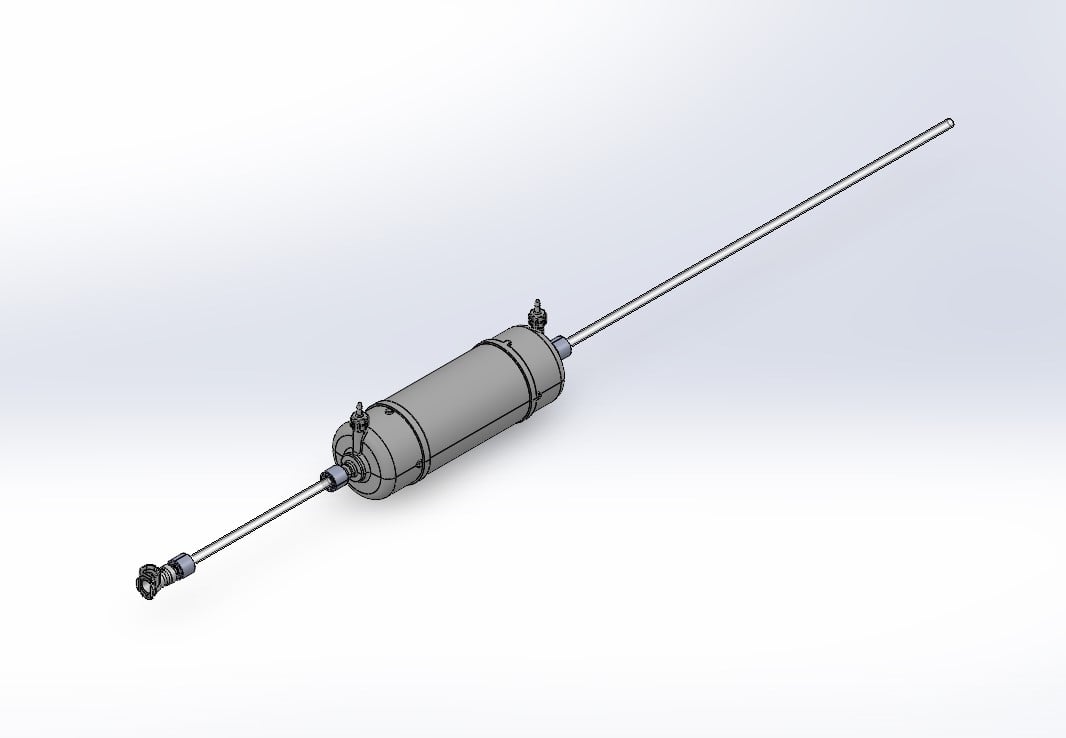
To minimize risk and optimize performance, tubing and fittings must be designed as an integrated system.
- Collaborate with tubing and fitting experts during the initial design phase, not after material selection.
- Evaluate connection performance across all operational conditions, including pressure, temperature, sterilization, and chemical exposure.
- Validate tubing and fittings as a system rather than independently.
- Prioritize consistency in material families to minimize differential mechanical aging and chemical reactions.
System-level thinking during component selection improves device robustness, reduces development timelines, and increases the likelihood of first-pass validation success.

Saint-Gobain PFAS-Free* Tubing Solutions


How tubing materials perform under autoclave, gamma, and ETO sterilization