




Silicone vs. Thermoplastic Tubing
In many device projects, tubing gets treated like a commodity, something to buy after the real engineering is done. Then the first sterilization run deforms the lumen, a bonding trial fails, or gas permeability sinks performance. Suddenly, tubing is on the critical path.
Choosing between silicone and thermoplastic tubing is not a catalog pick. It is a design decision that will determine how your device holds up under heat, pressure, repeated use, and production at scale. Get the choice right early and you avoid late redesigns, failed validations, and wasted spend.
Choosing the Right Material for Your Medical Device
Silicone Material for Medical Tubing
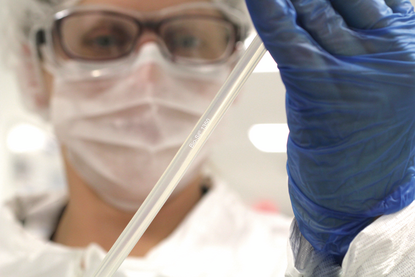
Silicone tubing has been a medical mainstay for decades when flexibility, heat stability, and long-term biocompatibility outweigh cost. Platinum-cured grades are stable over a wide temperature range and show a clean baseline on extractables, which is why you see silicone in extracorporeal circuits, reusable surgical tools, and short elastic segments in pump loops.
Positives
- Heat tolerance that holds up
Silicone keeps elasticity through thermal spikes and reprocessing. It maintains lumen patency without creeping or taking a permanent set, which protects flow and clamp performance. - Elastic recovery and kink resistance
Tight routing, clamp compression, and bend recovery are where silicone shines. The tube springs back and keeps the lumen open when geometry is working against you. - Clean biocompatibility profile
Medical grades are formulated for contact with tissues and fluids. You still validate for your application and device, but silicone starts with a favorable baseline, especially in water-based systems. - Peristaltic durability
In pump duty, many grades hold very tight flow stability. Fast wall recovery reduces drift, which makes calibration easier to keep locked.
Trade-offs
- Higher gas permeability
Oxygen ingress and CO₂ loss can matter in closed systems. You may need thicker walls, a barrier segment, or another material for long runs. - Solvent swell risk
Alcohols and nonpolar solvents can swell or soften silicone. Dimensional shifts change clamp force and pump behavior. - Bonding complexity
Joining to dissimilar materials often needs surface prep and adhesive or a mechanical interface. It is robust, but slower than welding or solvent bonding. - Cost at volume
Resin cost and line speed push piece price higher than many thermoplastics unless silicone enables geometry or reprocessing you cannot achieve otherwise.
Thermoplastics Material for Medical Tubing
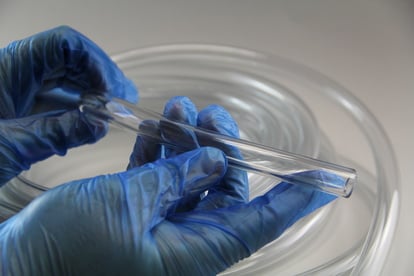
Thermoplastic tubing, such as TPU, PEBA, and custom transparent TPE formulations, cover a wide performance range. They are the default in many high-volume disposables because they run efficiently in extrusion, integrate cleanly into welded or solvent-bonded manifolds, and allow you to tune stiffness, clarity, and surface properties within the same material family.
In tubing, you can formulate for very different targets. Think soft, patient-friendly durometer for wearables. Think stiffer, pushable shafts for long supported runs. Think low-spallation blends for diagnostic pump loops. They are not as forgiving as silicone at high heat, but in the right applications they deliver a strong balance of performance and manufacturability.
Positives
- Lower permeability and solvent options
Many grades pass less gas than silicone. You can pick chemistries that hold dimensions and barrier under alcohols, lipids, or aggressive cleaners. - Assembly efficiency
Solvent bonding, thermal or RF welding, and overmolding reduce fittings and speed takt time. Integration with sensors and connectors is straightforward. - Design tuning in one family
Durometer, wall, and geometry can be dialed to hit pushability, kink resistance, and clarity targets. This improves handling and assembly yield. - Good economics at scale
Faster extrusion, high yields, and weldable joints drop unit cost for disposables when sterilization and fluids allow it.
Trade-offs
- Heat and sterilization limits are grade specific
Some grades creep or change modulus with steam. Radiation can stiffen or embrittle certain blends. Always test at worst case dose and cycle count. - Kink resistance may need help
Softer grades can kink at tight radii unless you increase wall, braid, or reroute. Those fixes add stiffness and can change user feel. - Additives and plasticizers
Certain formulations include additives that can migrate. This is manageable with resin selection and controls, but it pushes work into extractables testing under your exact conditions.

Sterilization often decides the answer
Sterilization plays a defining role in material selection for medical components, often influencing not just performance but overall feasibility of a design. Each method interacts differently with silicone and thermoplastics, making it essential to understand how materials respond under real‑world sterilization conditions.
Broadly compatible for both families. Focus on residuals and aeration time.
Usually favors silicone unless you pick a high temperature thermoplastic and limit cycles. Map hold times and cooling, then test to your full recipe.
Can yellow silicone while retaining function, and can stiffen or embrittle some thermoplastics. Validate at end of life dose on finished assemblies.
Match Material to the Application
Start with how the device will actually be used, not just a datasheet.
- 1. Fix the sterilization regime
Single EtO for a disposable set behaves very differently from repeated steam cycles for a reprocessable device. If steam is required, start with silicone and keep only thermoplastics that pass the full cycle plan.
Example: A reusable surgical suction line cycled through steam several times a day stayed dimensionally stable in silicone. A soft TPE variant met flow on day one but flattened after repeated cycles.
- 2. Map the fluid and solvent envelope
List every fluid and cleaner, with temperature and dwell time. Screen for swell, mass change, and stress cracking.
Example: A diagnostic manifold cleaned with alcohol between runs saw measurable swell in silicone that shifted clamp force. A medical TPE held dimension and kept clamp performance stable.
- 3. Set mechanical targets tied to geometry
Define minimum bend radius, collapse pressure, tensile and tear strength at the routed lengths and supports you will build. Silicone often wins tight bends and clamp compression. Thermoplastics win long supported runs where pushability helps.
Example: A handheld pump head needed a 12 mm bend around a corner under negative pressure. Silicone kept lumen patency. The TPE option worked only with a thicker wall that made the handle bulkier.
- 4. Choose assembly methods early
If the design depends on welded or solvent-bonded manifolds and sensor ports, thermoplastics simplify the build. If most joints are silicone to silicone, adhesives are robust and predictable, just slower.
Test to acceptance criteria: pull strength by joint type, burst after aging, and leak at pressure and vacuum.
- 5. Control permeability where it matters
If headspace gases or drug concentration must stay tight, use thermoplastic runs for the barrier and reserve silicone only where elasticity is required, such as the short pump segment.
- 6. Quantify particulate and spallation for pumps
Do not assume a winner. Run your duty cycle on your pump head with your fluid at temperature. Measure downstream with a filter and count to a prewritten spec.
- 7. Close with cost and risk
Model total landed cost at your volume. Include resin, line speed, scrap, secondary ops, sterilization, yield, and supplier risk. Qualify a second source or an alternative family for critical SKUs.
Material Choice Guidelines
Hybrid Patterns that Work
- Diagnostics loop
Low spallation thermoplastic for long fluid paths and manifolds. A short silicone segment only where the rollers need elasticity. - Surgical suction
Silicone for heat and bend through reprocessing. Thermoplastic connectors and Y pieces for fast welding and strong pulls. - Drug delivery line with alcohol exposure
Thermoplastic main run for solvent resistance and barrier. Silicone only at the patient interface for comfort.
A Quick Way to Decide
Ask three hard questions before you commit to architecture.
- What sterilization recipe and cycle count will this tube see in the field?
- Which fluids and cleaners touch it, at what temperatures and dwell times?
- How will we assemble it at scale, and how many joints depend on welding or solvent bonding?
If the answers point to heat and tight bends, start with silicone. If they point to barrier, welded manifolds, and line speed, start with thermoplastics. If they point to both, use both, and keep the elastic segment as short as possible.
Pick the material that makes the rest of your device simpler. Match sterilization, fluid chemistry, routing, and assembly to the material, then prove it on your line with your fluid at your cycle count. That is how you avoid late redesigns and lock in performance that holds up outside the lab.

The Critical Role of Material Selection in Medical Tubing


How tubing materials perform under autoclave, gamma, and ETO sterilization