



Navigating Sustainability: The Critical Role of Material Selection in Medical Tubingd
As the global conversation around sustainability intensifies, traditional approaches such as waste reduction and the adoption of low-carbon energy sources often take center stage. However, the selection of materials plays a crucial, yet sometimes overlooked, role in determining a medical device’s overall environmental impact, particularly regarding carbon emissions.
Let’s focus on the medical tubing ecosystem to understand which material classes have the most significant carbon emissions impact. To assess this impact, we need two key pieces of data: the amount of medical tubing used by material type and the global warming potential (GWP) of these materials. Although precise figures are challenging to obtain, we can make estimations that reveal general trends and identify materials with significant emission impacts.
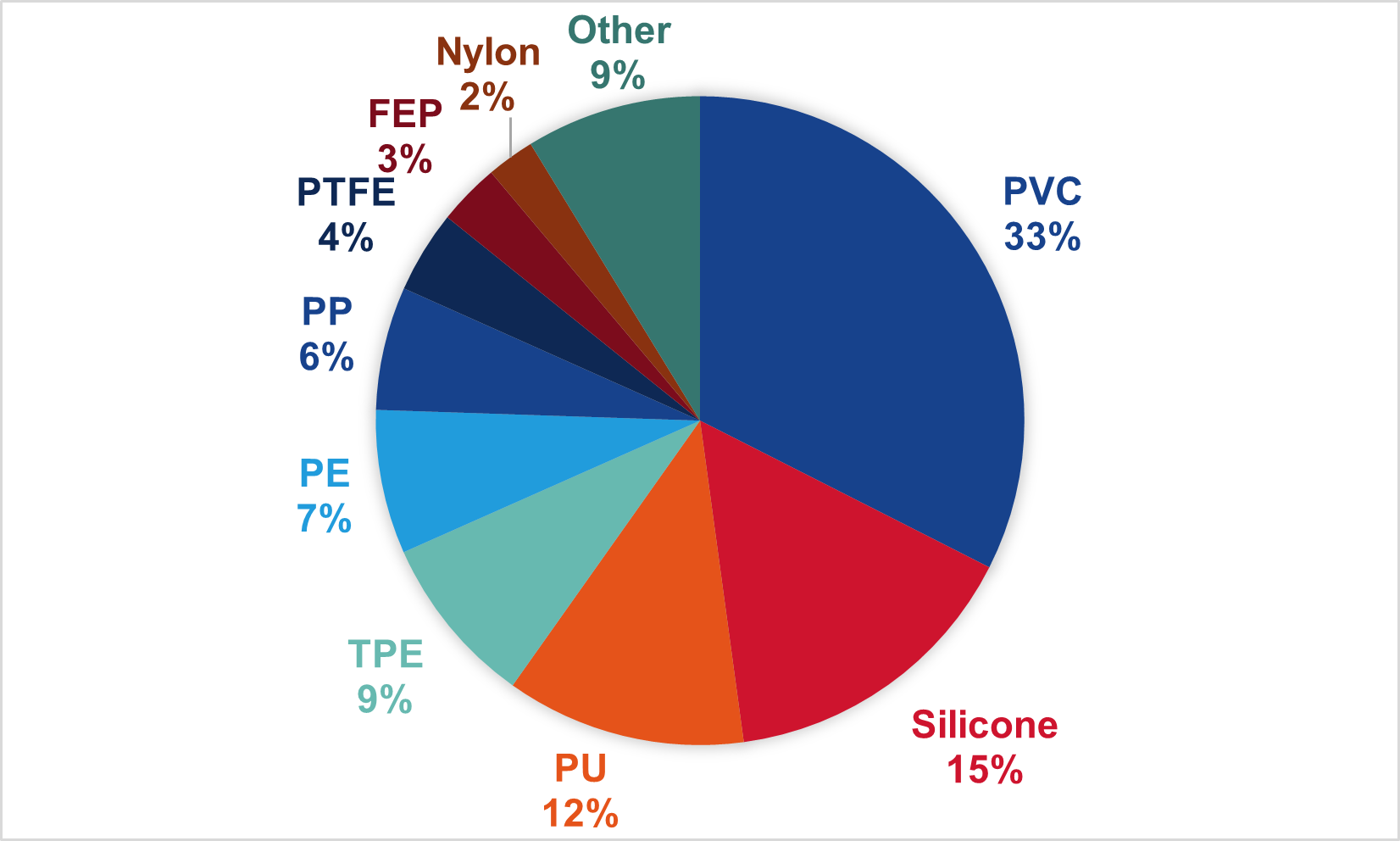
First, we must identify the most commonly used materials. By synthesizing both external and internal data, we can develop a rough estimate of the most utilized medical tubing materials by weight, as shown in Figure 1.
The second piece of information necessary to understand the holistic emission impact of medical tubing is the global warming potential (GWP) of various materials. This metric can be difficult to pinpoint accurately, as emissions can vary significantly based on additives, polymer grades, and processing conditions. Therefore, it’s essential to conduct individual product-related Life Cycle Analyses (LCAs) for a more precise assessment of emissions. For this higher-level analysis, I have utilized general GWP values from various scientific publications. The findings for the most commonly used polymers are illustrated in Figure 2.
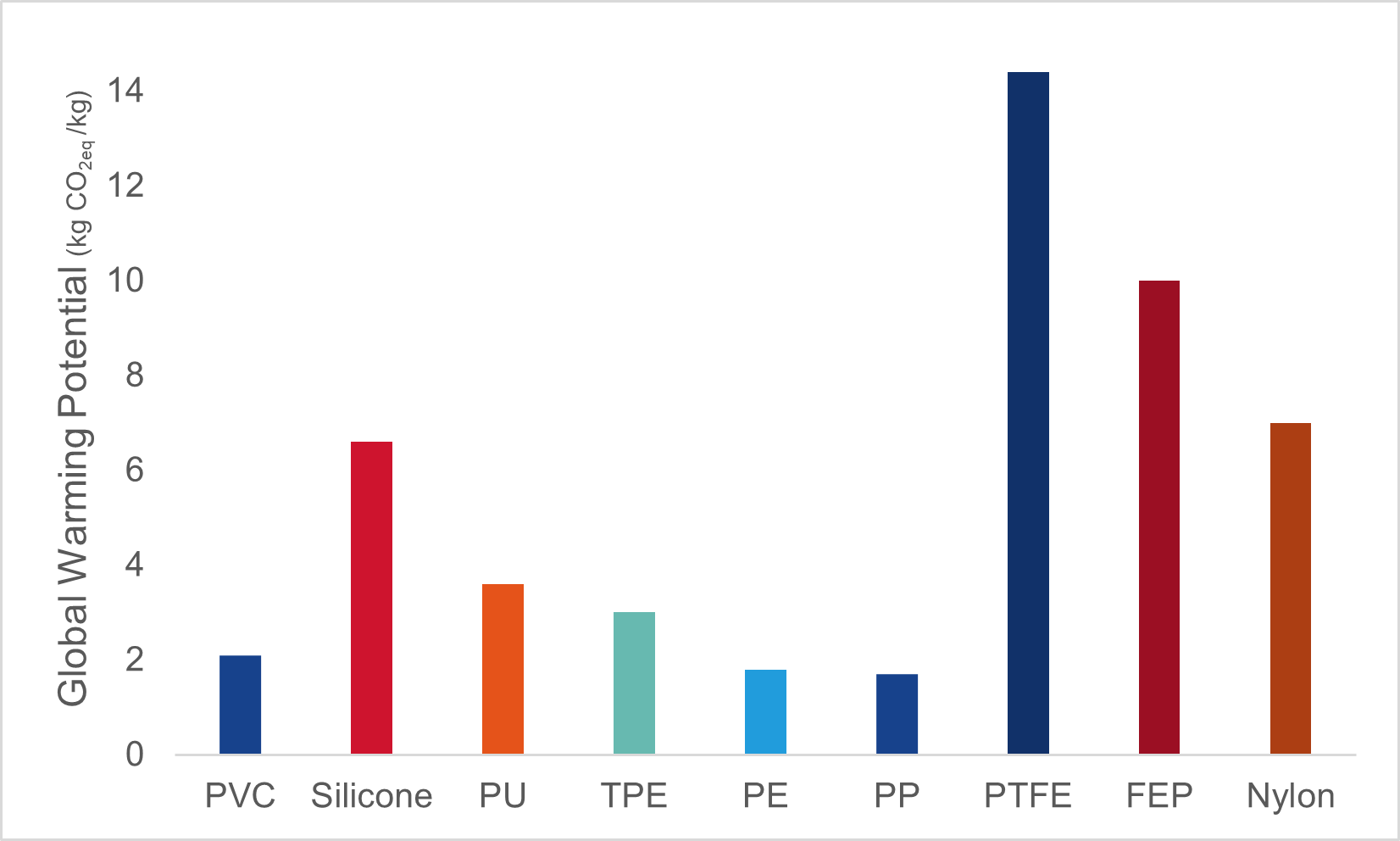
A notable trend emerges: fluoropolymer-based materials (such as PTFE and FEP) have significantly higher emissions than polyolefin-based materials (like PE and PP), primarily due to the energy-intensive processes required to manufacture fluoropolymers.
PTFE (polytetrafluoroethylene) is commonly used for medical tubing and is produced by polymerizing tetrafluoroethylene (TFE) gas. This process involves aggressive chemicals, such as hydrofluoric acid. The resulting PTFE powder is then sintered, granulated, and paste-extruded into tubing. Unfortunately, this production method releases potent greenhouse gases, particularly perfluorinated compounds (PFCs), which have a high global warming potential and a long atmospheric lifespan. While PTFE offers numerous medical benefits, its production significantly impacts the environment due to these emissions and its energy-intensive nature.
Polyolefin production, in contrast, involves simpler, lower-energy polymerization processes without aggressive chemicals. PP and PE mainly emit CO₂, avoiding the potent greenhouse gases produced by PTFE manufacturing. These plastics also generate fewer toxic byproducts and are easier to recycle, positioning them as more environmentally friendly alternatives.
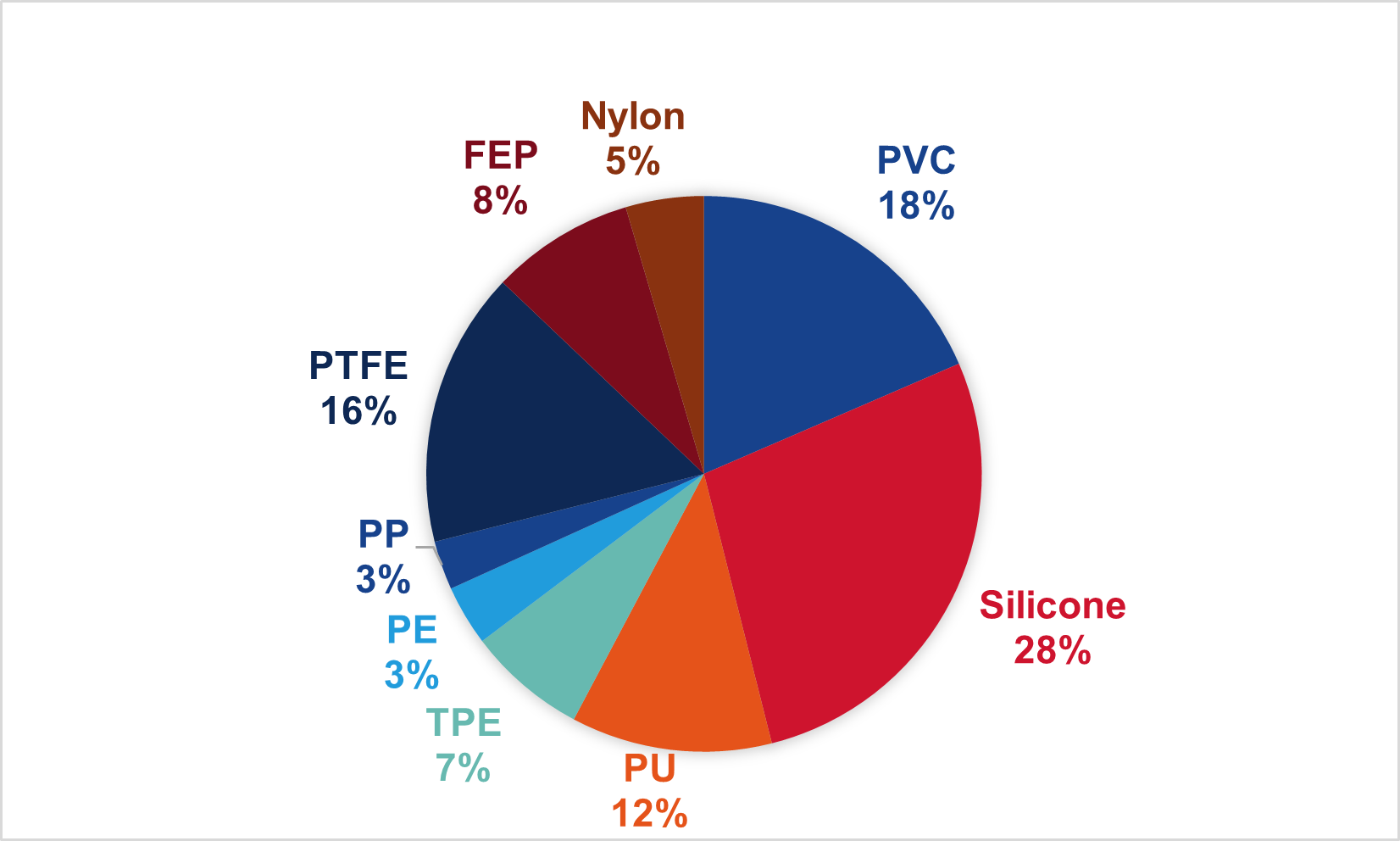
By multiplying the GWP of each material by its total consumption, we can see that fluoropolymers, despite their relatively low usage, contribute disproportionately to emissions within the medical tubing ecosystem, as depicted in Figure 3.
However, finding a “silver bullet” replacement for PTFE tubing within the medtech ecosystem is not straightforward. Fluoropolymers possess unique chemical structures that confer many desirable properties for medical devices. PTFE is highly valued for medical tubing due to its:
- **Low Friction**: Its non-stick surface reduces friction, making it ideal for catheter and guide wire applications.
- **Chemical Resistance**: PTFE resists a wide range of chemicals, ensuring stability in various medical environments.
- **Temperature Resistance**: It maintains integrity across a broad temperature range, making it suitable for sterilization processes.
This impressive combination of properties makes PTFE challenging to replace. However, by exploring specific combinations of properties or seeking to reduce the reliance on fluoropolymers while maintaining these key attributes, new opportunities arise. Saint-Gobain, a long-standing leader in materials science, is at the forefront of this transformation. By leveraging decades of expertise, the company is dedicating resources and research efforts toward developing sustainable alternatives to this high-carbon-emission polymer class.
Alternatives to PTFE
- **Low Friction: Tygon LCF**
PTFE has long been regarded as the gold standard for low coefficient of friction (COF) materials in the medical device industry. However, if you're seeking an alternative, Tygon LCF offers one of the lowest COF values within the thermoplastic elastomer (TPE) family (0.29). Additionally, it is more cost-effective than fluoropolymers while still providing the necessary flexibility for tubing applications. - **Chemical Resistance: Tygon 2475**
When considering fluoropolymer replacements, it's essential to understand the specific chemistries that the tubing will encounter. While PTFE boasts a broad range of chemical compatibility, often, such extensive resistance is not required for specific applications. Tygon 2475 is a TPE that exhibits high resistance to aggressive cleaners and sanitizers, while also delivering exceptionally low adsorption. Its smooth inner surface helps inhibit particulate entrapment, making it a suitable alternative for many applications. - **Temperature Resistance: PEEK**
For applications requiring high temperature resistance, PEEK is one of the closest alternatives to fluoropolymers. It offers excellent chemical and corrosion resistance, making it a compelling option. However, it does lack optical transparency and flexibility. If these properties are essential for your high-temperature application, a silicone tube, such as Bio-Sil, may be a better recommendation. - **Reduction of Fluoropolymer Content: Multi-layer Tubing**
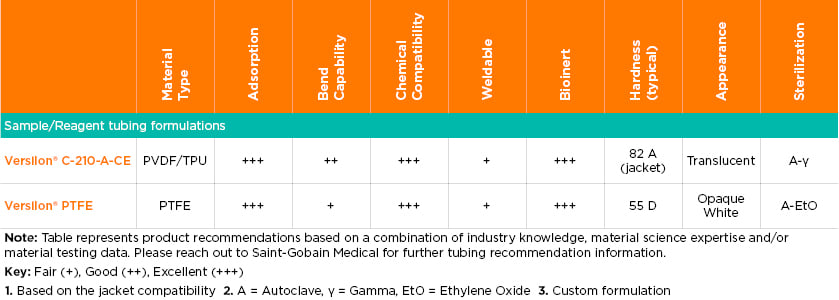
If your application demands the preservation of properties, especially for aggressive or sensitive fluids, yet you still want to minimize the environmental impact of your product, multilayer tubing could be an ideal solution. This type of tubing allows for fine optimization and customization of properties. For example, the Versilon C-210-A-CE features a PVDF fluid-contact inner layer combined with a TPU outer jacket. This design maintains fluidic interaction while reducing fluoropolymer material usage by 70%. Additionally, multilayer tubing enhances bendability and reduces costs compared to virgin PVDF. An illustrative comparison of the properties of interest highlights the strengths of this solution.
In conclusion, medical tubing materials contribute to emissions in vastly different ways, with fluoropolymer-based tubing having a pronounced impact. By carefully considering the specific properties required for your application, viable alternatives may exist. If the unique properties of fluoropolymers are essential, multilayer tubing presents a promising option to reduce the overall emission impact while still retaining the benefits of fluoropolymer materials.

How tubing materials perform under autoclave, gamma, and ETO sterilization


Optimize performance with integrated design
