





How Thermoplastic Injection Molding Shapes Modern Medical Components
Thermoplastic injection molding is the manufacturing backbone of the modern medical device industry. From drug delivery systems to diagnostic cassettes, this process enables the mass production of complex, high-precision components that meet strict regulatory and clinical performance standards. Yet, beneath the surface of this mature process lies a sophisticated blend of materials science, tooling strategy, and process control.
This article takes a deep dive into the thermoplastic molding landscape for medical applications exploring how parts are designed, what materials are used, and why the process is critical to scaling innovation in a regulated environment.
Injection Molding in Medical: More Than Just Plastic Parts
At its core, thermoplastic injection molding involves heating a plastic resin, injecting it into a closed mold under pressure, then cooling and ejecting the solid part. But in the medical space, this straightforward sequence unfolds under far tighter constraints than in consumer or industrial applications.
Medical components are often:
- Made in ISO Class 7 or 8 cleanrooms
- Molded with tolerances of ±0.001 to ±0.005 inches
- Validated across IQ/OQ/PQ stages
- Designed to withstand sterilization (gamma, autoclave, EtO)
- Produced with full lot traceability and regulatory documentation
Thermoplastic molding is central not only to function but also to compliance. A connector or pump housing isn’t just plastic, it’s a validated, traceable, and highly engineered device component.
Tooling for Medical: Precision as a Prerequisite
Tooling represents a major upfront investment in medical molding programs, frequently accounting for 30–50% of non-recurring engineering costs. In this high-stakes environment, molds must deliver repeatability over millions of shots. Tooling decisions also strongly influence scalability and long-term cost-per-part, particularly important for low- to mid-volume medical production, where upfront investments must be balanced against total lifecycle output and yield performance.
Critical tooling considerations include:
- Steel selection: Corrosion-resistant tool steels (e.g., S136, H13) are often used to handle abrasive fillers and aggressive cleaning cycles.
- Vent design: Essential for thin-walled parts and to prevent burn marks or incomplete fills in micro features.
- Polishing and texture: Optical components require SPI A2 or better surface finishes. Mold texture also affects cleanability and usability.
- Conformal cooling: Used to manage thermal gradients in complex parts, especially semi-crystalline resins like PEEK or POM.
- Gate design: Edge gates, hot runners, and valve gates are optimized to minimize weld lines and gate vestiges, which are critical in fluidic or mating parts.
Design for manufacturability (DFM) also plays a key role. Uniform wall thickness, properly located ribs, and draft angles are not just aesthetic choices, they affect mold fill behavior, cycle time, and long-term part reliability.
Understanding the Thermoplastic Spectrum
Thermoplastics are not a single material but a diverse category encompassing dozens of polymer families. Each offers unique characteristics across strength, temperature resistance, biocompatibility, sterilization tolerance, and moldability.
| Category | Examples | Key Attributes | Use Cases |
|---|---|---|---|
| Ultra Engineered | PEEK, PPSU, PEI, PAI | Chemically inert, high heat resistance, autoclavable | Surgical instruments, sterilization trays, structural implants |
| Engineering | PC, PET, POM, ABS | Strong, dimensionally stable, easy to mold | Enclosures, device housings, fluidic bodies |
| Standard | PP, HDPE, LDPE | Inexpensive, chemically resistant | Tubing barbs, caps, disposable connectors |
| Elastomeric | TPU, TPE-S, TPE-E | Flexible, soft-touch, overmoldable | Seals, gaskets, wearable device interfaces |
| Fluoropolymers | PVDF, FEP, ETFE | High chemical resistance, low friction | Catheters, valve components, containment chambers |
Choosing a resin involves navigating tradeoffs. For example, PEEK offers unmatched performance but is costly and challenging to mold. PP is inexpensive but unsuitable for gamma sterilization. Engineers must weigh these against regulatory considerations, mechanical requirements, and long-term stability. In practice, this often means selecting between materials that meet a specification in different ways, balancing sterilization resilience, biocompatibility, and manufacturability within the constraints of the part's geometry and required tolerances. A single part might be made from PPSU for reusable surgical applications or PC for a disposable diagnostic device, depending on end-use demands and cost targets.
Additional considerations include:
- Sterilization compatibility: Autoclave (steam), EtO, gamma, and e-beam can degrade polymers differently.
- Drug contact safety: Extractables and leachables must be controlled; colorants or radiopaque fillers must not migrate.
- Supply chain risk: Specialty grades like PPSU or medical PEI may have long lead times and limited global suppliers.

Process Design: More Than Just Molding
Medical molding isn’t just about shaping plastic. It’s about building a controlled system that ensures repeatability, cleanliness, and traceability across every part produced.
Core infrastructure includes:
- ISO Class 7/8 cleanroom molding
- Closed-loop process controls (pressure, fill time, cavity balance)
- Drying and resin handling for hygroscopic materials (e.g., PC, nylon)
- 6-axis robotic part removal to eliminate contamination
- In-line vision systems for flash, gate vestige, or short shot detection
Post-mold operations like ultrasonic welding, laser marking, and subassembly are tightly integrated. Every step must comply with ISO 13485 and FDA 21 CFR Part 820, and be documented in the Device Master Record.
Digital validation tools (e.g., Moldflow, Moldex3D) are also becoming standard for simulating flow behavior and predicting weld lines or voids before steel is cut. Increasingly, these digital simulations are integrated into regulatory submissions to support process understanding, particularly for Class II and III devices where first-pass success is critical. Real-time analytics from smart machines allow cavity-specific tracking, predictive maintenance, and can generate process data that supports Design History File (DHF) documentation.
Special Challenges in Medical Injection Molding
- Sterilization-Induced Degradation
Materials like PC may yellow or lose impact resistance under gamma sterilization. Conversely, PEI and PPSU withstand repeated autoclave cycles but may be sensitive to dry heat or prolonged EtO exposure.
- Micromolding and Miniaturization
Parts with <1 mm features or shot sizes under 1 gram require specialized machines, tooling, and part handling. Tool venting, gate freeze, and ejection become far more difficult.
- Insert Molding and Multi-Material Challenges
Mechanical mismatches in shrink rate or modulus can lead to internal stress, warping, or delamination. Material adhesion and thermal compatibility must be validated.
- Weld Lines and Flow Marks
Even minor defects can become critical when parts mate or carry fluid. Mold design, gate location, and process window must be optimized to minimize knit lines.
- Documentation and Traceability
Changes to molding parameters, mold maintenance, or material lot require change control and may trigger partial revalidation depending on the device’s regulatory pathway.
Regulatory Implications and Risk Management
Injection molded components are often Class II or III device subassemblies, meaning they are subject to Design History File (DHF) and Device Master Record (DMR) controls. Process validation must include:
- ISO 14971-aligned risk management documentation for each molding step
- IQ (installation qualification)
- OQ (operational qualification)
- PQ (performance qualification over multiple lots)
For critical parts, some OEMs now require cavity-level traceability, mold change logs, and production release protocols tied to complaint trending or CAPA processes.
Looking Forward: Innovation and Industry Trends in Practice
As medical device requirements continue to evolve, thermoplastic injection molding is advancing alongside them. New materials, smarter process controls, and more integrated component designs are reshaping what manufacturers can achieve in terms of performance, efficiency, and innovation.
Emerging trends include:
- Sustainability: Biopolymers and recyclable thermoplastics are gaining attention, though clinical adoption is slow due to regulatory and performance hurdles.
- Digital Twins: Mold simulations are increasingly used to predict outcomes before mold steel is cut.
- Advanced Metrology: Cavity pressure sensors, real-time analytics, and feedback loops reduce scrap and improve consistency.
- Integrated Functionality: Overmolded electronics, sensors, and embedded fluidics are pushing boundaries on what’s possible with molded parts. For instance, wearable drug delivery platforms are now embedding microfluidics and flexible electronics directly into the housing, requiring careful mold design and overmolding protocols to avoid damage or delamination during production.
Why Thermoplastic Injection Molding Matters in Medical Device Manufacturing
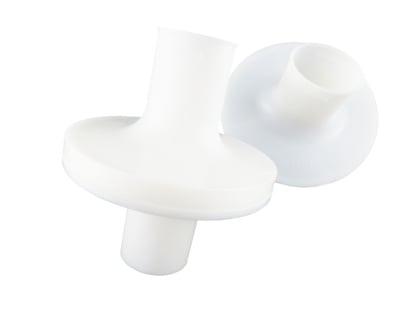
Thermoplastic molding in medical is not just a fabrication method, it is a systems-level manufacturing discipline that integrates material science, tooling strategy, cleanroom control, and regulatory rigor. Understanding how these elements interact allows engineers and device teams to accelerate development while ensuring clinical reliability.
For companies building next-generation diagnostics, drug delivery platforms, or surgical tools, a command of thermoplastic molding fundamentals is essential to going from concept to clinic, with confidence in every part.

5 hidden risks in thermoplastic injection molding


Injection molding shapes modern medical components
