Key takeaways from MD&M West 2026
Sterilization moved upstream, sustainability became a gate, and factory AI had to prove it
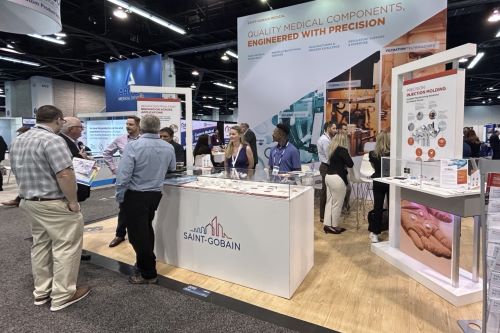
MD&M West 2026 did not feel like an industry shopping for new ideas. It felt like an industry tightening the definition of “ready.” You could hear it in the conversations that began at the same place: validation pathways, compatibility, documentation depth, and what happens after sterilization. The interesting shift was not that innovation slowed down, but rather the industry is demanding proof earlier, having less patience for anything that depends on heroics later.
Three themes dominated the week, with one unifying thread connecting them all.
- First, sterilization is no longer a downstream detail. It is back in the design room, shaping materials, packaging, labels, adhesives, and assembly choices while the program still has degrees of freedom.
- Second, sustainability is moving from aspiration to selection pressure. It is showing up as factory math and supplier screening, not just brand language.
- Third, Artificial Intelligence (AI) in manufacturing is judged in the only way it should be: on yield, downtime, inspection throughput, and whether it fits inside a regulated change control world.
And across all three, the real differentiator is design for evidence, meaning teams are increasingly choosing materials and processes based on how cleanly they can be validated, documented, and supported for the life of the product.
Sterilization is Back in the Design Room
The sterilization conversation has changed shape. Historically, many teams treated sterilization as downstream confirmation, with a default assumption baked into the program until late-stage testing forced a rethink. At MD&M West 2026, sterilization showed up earlier and more frequently, and it rarely stayed confined to a single discussion. It pulled packaging, barrier integrity, labels, adhesives, and polymer choices into the same decision gate.
The most useful conversations were not about modality preferences. They were about failure modes and transition pathways. If a team changes its sterilization approach, what is most likely to break first, and how would you know quickly? Is the weak link the polymer property shift that changes stiffness or flexibility? Is it seal creep or dimensional drift that shows up as leaks or assembly yield loss? Is it haze or surface change that complicates inspection? Is it label lift, adhesive drift, or barrier compromise that triggers a packaging revalidation spiral? These questions are not academic. They are scheduled risk, because sterilization-driven surprises arrive late, and they tend to arrive bundled with documentation and requalification workload.
For materials and fluid paths, this shift is especially consequential because the failure modes are often quiet. Programs do not fail because a tube catastrophically cracks in half, they fail because a material that looks stable becomes harder to assemble, harder to inspect, or harder to defend after sterilization, aging, and real handling. The new expectation is not perfection. It is credibility. Teams are looking for compatibility evidence that is believable and documented, even if it is not exhaustive, and they want that evidence early enough to shape the design instead of explaining surprises at the end.
The uncomfortable implication is that “compatible with sterilization” can no longer mean “it survived one standard cycle in a lab.” Compatibility is becoming a system-level claim, spanning materials, packaging, and real manufacturing conditions. If sterilization is not a serious consideration when materials are chosen, it will show up later as a problem that could be masked as quality, supply chain or timeline.
Sustainability Shifts from Messaging to Factory Math and Supplier Gating
Sustainability at MD&M West 2026 felt less like a pledge and more like a discipline. The conversations that carried weight were not framed around intent. They were framed around measurable levers: scrap reduction, energy intensity, water usage, process stability, and packaging right sizing. When sustainability is discussed this way, it stops being a parallel initiative and starts reading like good manufacturing, because it is the same list of levers that also reduce cost and operational risk.
The more important shift is where sustainability is landing in the buying process. It is increasingly treated like part of supplier evaluation rather than a tie-breaker at the end. The language has moved from “we care about this” to “we are going to ask for this.” That is a meaningful change for component suppliers and material-driven assemblies, because the sustainability discussion quickly becomes a documentation discussion. Traceability, change control discipline, and the ability to explain what changed, when, and why, begins to matter as much as the material choice itself.
There is a real tension here. Teams want more sustainable materials and processes, but they cannot accept volatility, qualification ambiguity, or documentation gaps. Sustainability does not get a free pass. It must survive the same scrutiny as everything else. The winners will be the teams that can connect sustainability improvements to stable manufacturing outcomes and a credible evidence trail, not just a narrative. Said differently: sustainability is increasingly being treated as a risk screen. If the story is fuzzy, it is not neutral; it is a question mark.
Factory AI had to prove it
The AI conversation got better this year because it got narrower. Instead of debating what AI is, manufacturing teams were asking where it pays and what it takes to deploy it without breaking governance. The most credible use cases were operational, not philosophical: reducing unplanned downtime, improving first pass yield, easing inspection bottlenecks, and prioritizing maintenance based on signals instead of schedules. That is the only AI conversation worth having in a factory, because it ties directly to throughput, waste, and reliability.
Just as important, the limitations were discussed more openly than in prior years. AI does not rescue messy processes. It exposes them. Poor measurement systems, inconsistent inspection thresholds, weak data hygiene, unclear ownership, and loose change control do not become better because a model exists. They become faster ways to make a wrong decision confidently. In regulated environments, that is not just a technical risk. It is a quality and compliance risk because traceability and justification are not optional.
This is where AI intersects with materials and components more than most people admit. A factory that starts demanding measurable yield improvement will start demanding measurable explanations for variation. That pulls attention toward critical quality characteristics, inspectionability, lot genealogy, and whether parts behave consistently after sterilization and aging. AI does not replace quality systems. It raises the bar for how observable and defensible the manufacturing process needs to be.
The Unifying Thread: Design for Evidence is Becoming the Differentiator
Across sterilization, sustainability, and manufacturing AI, the week kept circling the same underlying question: Can you defend this choice later?
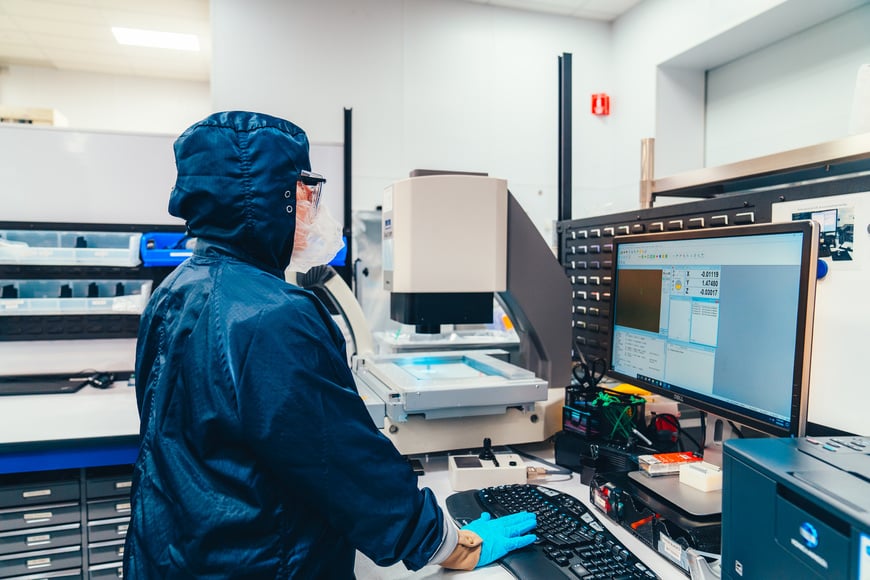
Not just technically. Operationally. Can you qualify it without heroics? Can you build a validation narrative that holds up under scrutiny? Can you support it when something changes in the supply chain? Can you show documentation depth that makes quality teams comfortable rather than nervous?
For materials and component selection, this is the shift that changes supplier expectations. Performance still matters, but it is increasingly table stakes. The differentiator is the evidence package behind performance: compatibility across sterilization pathways, stability over time, documentation and change notification discipline, and a manufacturing story that does not fall apart at scale. A good component is still important, but it is increasingly just the entry ticket. The teams that win are the ones who reduce surprises because they design for proof from the start.
The Monday morning checklist
If you want to convert MD&M West 2026 learnings into action, these are the questions worth bringing back to your team:
- Do we treat sterilization method and packaging compatibility as go/no-go criteria during material down-selection, or do we still validate them only after the design is largely set?
- Do we know the first likely sterilization failure mode in our system: polymer property shift, seal behavior, label and adhesive, or barrier integrity?
- Which sustainability initiatives reduce footprint and improve operating performance in the same move, starting with scrap, energy, water, and packaging?
- Where could manufacturing AI realistically improve yield, downtime, or inspection throughput, and what governance and traceability would make it acceptable in a regulated environment?
- Do we have a design for evidence plan for materials, assembly, and supplier documentation that matches the reality of qualification and lifecycle support?
Innovation Meets Accountability
MD&M West 2026 did not feel like an industry trying to impress itself. It felt like an industry trying to de-risk itself while still moving forward. Sterilization is moving upstream. Sustainability is becoming measurable and increasingly a gate. Factory AI is being judged on outcomes. The common thread is credibility, and the new bar is simple: if you cannot document it and defend it, it will not scale.

How validation ensures reliable medical molding


How tubing materials perform under autoclave, gamma, and ETO sterilization