




Choosing the Appropriate Medical Tubing for your In Vitro Diagnostic Analyzer
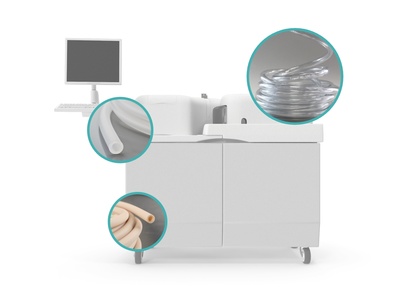
In vitro diagnostics (IVD) plays a key role in the healthcare ecosystem and selecting the right tubing for your IVD analyzer is essential for achieving accurate and reliable results. With so many options available, it can be overwhelming to determine which tubing is best suited for your needs. With over 355 years of material expertise, Saint-Gobain Medical has developed several standard tubing formulations that are specifically designed to meet the needs of the medical market, including Tygon®, Bio-Sil®, and Versilon® tubing. In this article, we'll explore the different types of medical tubing and what to consider when selecting custom tubing solutions for your diagnostic process.
Improve in vitro diagnostics process performance
Within in vitro diagnostics, the performance criteria needed for each workflow step is unique, requiring specific tubing for each stage. Recognizing that selecting the ideal tubing can be a daunting task, we have categorized tubing into three groups: sample processing tubing, waste disposal tubing, and pump tubing. Within each of these groups, we’ve identified the attributes and specifications critical for ideal performance.
| Sample/Reagent Tubing | Waste Disposal Tubing | Pump Tubing |
|---|---|---|
| Low Absorption | Easily Welded/Bonded | Excellent Peristaltic Pump LIfe |
| Excellent Chemical Compatibility | Good Chemical Resistance | Good Chemical Resistance |
| High Flexibility | Cost Effective | Low Spallation |
| Bioinert |
Transfer and pump tubing recommendations for IVD applications
Samples, Reagents Tubing Recommendations
When it comes to fluid management of samples and reagents, selecting the right tubing is crucial for achieving accurate results. Tubing formulations for this purpose should demonstrate low adsorption, excellent chemical compatibility, high flexibility to navigate complex configurations within a small footprint, and bioinertness, particularly for the analysis of blood samples. At Saint-Gobain Medical, we offer six (6) material formulations that are frequently used for samples and reagents processing tubing, each with specific benefits that are discussed in detail below.
| Versilon® C-210-A-CE (multi-layered with fluoropolymer liner) | Versilon® PTFE | Bio-Sil® Silicone Tubing | Versilon® PEEK | TYGON® 2475 | TYGON® MPF-100 |
|
|
|
|
|
|
Waste Disposal Tubing Recommendations
Fluid management of waste products is an essential aspect of the in vitro diagnostics process and selecting the right tubing for waste disposal is crucial. Tubing formulations for this purpose should be easy to weld or bond, exhibit good chemical resistance, and be cost-effective. At Saint-Gobain Medical, we offer three (3) popular material formulations for waste disposal tubing, each with specific benefits that are highlighted below.
| TYGON® ND 100-65 (Flexible Thermoplastic) | TYGON® E-3603 (Flexible Thermoplastic) | TYGON® MPF-300 (TPU) |
|
|
|
Peristaltic Pump Tubing Recommendations
Peristaltic pump tubing can be a critical component of the in vitro diagnostics process, responsible for fluidic movement throughout the analyzer. At Saint-Gobain Medical, we offer four (4) optimized material formulations that are specifically designed for excellent pump performance: exhibiting dosing accuracy, chemical resistance, and longevity. The main benefits of each of our most popular peristaltic pump tubing formulations can be found below.
| PharMed® BPT Tubing (TPV) | Sanipure™ BDF™ Tubing (TPE) | PharmaPure® Tubing (TPE) | Tygon® E-LFL Tubing (Thermoplastic) |
|
|
|
|
Trust Saint-Gobain Medical for your in vitro diagnostics tubing needs
Selecting the right medical tubing for your in vitro diagnostics analyzer is crucial for achieving accurate and reliable results. Whether you choose from our standard tubing formulations or collaborate with our engineers to develop a custom tubing solution, we are here to support you every step of the way. At Saint-Gobain Medical, we are committed to providing tubing solutions that are specifically designed to meet the needs of the medical market. By considering the unique performance criteria needed for each process step and working with experienced suppliers, you can ensure that you are selecting the ideal tubing for your needs and achieving optimal performance in your in vitro diagnostics process.


Six Key Parameters for Tubing Selection


What manufacturers need to know about medical-grade standards
