




Engineering Precision: Automation in Medical Device Manufacturing
Interview with Dean Thompson, Technical Engineering Manager
In the fast-evolving world of medical device manufacturing, automation is no longer a luxury—it’s a strategic necessity. We sat down with Dean Thompson, Technical Engineering Manager at Saint-Gobain Medical, to explore how in-house automation capabilities are driving innovation, improving efficiency, and enabling greater customization in medical molding. With deep technical expertise and hands-on experience, Dean shares how his team is engineering smarter systems from the inside out.
Strategic Value of Internal Automation
Q: Why is it important for a medical molding company to develop and maintain internal automation capabilities rather than relying solely on outside automation houses?
A: Having internal automation capabilities gives us control—over timelines, over design, and over outcomes. We’re not waiting on external vendors to understand our parts or processes. We can iterate quickly, solve problems in real time, and build systems that are truly tailored to our needs.
Q: What advantages do internal teams have when it comes to speed, customization, and iterative problem-solving?
A: Speed is a big one. We can prototype, test, and refine without the delays of outsourcing. Our team knows the nuances of our parts and processes, so we’re not starting from scratch every time. That iterative loop—design, test, improve—is much tighter when it’s all in-house.
Q: How does internal automation influence long-term innovation?
A: It’s foundational. When you own the automation, you’re not just solving today’s problems—you’re building a platform for future growth. We’ve learned from early systems and applied those lessons to new cells, making them faster, more cost-effective, and more scalable.
Design for Manufacturability (DFM) & Automation Readiness
Q: How does DFM at the component level directly impact the success of automated assembly in high-volume production?
A: DFM is everything. If a part isn’t designed with automation in mind, you’re going to hit roadblocks—alignment issues, handling problems, inconsistent quality. We work closely with design teams early on to make sure parts are automation-ready from day one.
We saved costs and avoided major issues by applying what we learned from that first system."
Q: Can you share an example where early DFM input significantly reduced production costs or improved product performance?
A: Absolutely. One of our early systems was built under pressure—nothing was working, and we had to automate on the fly. It was stressful, but we learned a lot. When we scaled up, we redesigned the system properly, and it was faster, cheaper, and more reliable. That early DFM input made all the difference.
Q: How do you ensure that DFM principles are aligned with automation constraints and opportunities?
A: It’s a collaborative process. Our automation engineers work hand-in-hand with design and validation teams. We’re constantly asking: Can this be molded consistently? Can it be picked up, placed, inspected, and assembled reliably? That alignment is key.
Customization & Flexibility in Automation
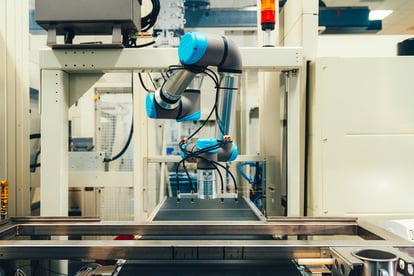
Q: What’s your approach to customizing automation systems for unique part geometries or materials?
A: Every part we work with is unique. So we approach each project with an open mind—no assumptions. We bring past experience, but we tailor every system to the specific needs of the product and the customer.
Q: How does in-house machine fabrication enhance your ability to meet specific customer or product requirements?
A: It’s huge. We’re building machines for the part—not the other way around. Our team works closely with production and validation, and even gets feedback from operators. That agility and collaboration make our systems better for everyone.
In-house fabrication means we’re not just building machines—we’re building the right machines.”
Engineering Challenges
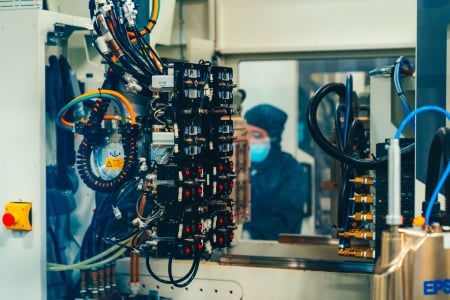
Q: What are the most common technical hurdles when automating micro-molding or multi-material components?
A: Precision and consistency. Micro molding and multi-material parts have tight tolerances and complex geometries. You need automation that can handle that level of detail without compromising quality.
Q: How do you ensure consistent part quality when dealing with high-cavitation molds and tight tolerances?
A: It comes down to process control and feedback loops. Our automation systems are designed to monitor key parameters and flag deviations early. That helps us maintain quality even at high volumes.
End-of-Line Automation
Q: What are the key considerations when designing automated systems for medical components?
A: Regulatory compliance, product traceability, and environmental control are top priorities. But we also think about operator interaction, maintenance, scalability, and ergonomics. It’s not just about building a machine—it’s about building a system that works in the real world.
Q: How do you balance cost reduction with the need for customization that meets regulatory and customer requirements?
A: It’s a balancing act. Sometimes we fund automation internally to drive long-term savings. Other times, customers invest upfront. Either way, we’re always looking for ways to reduce cost without compromising quality or compliance.
Innovation & Future Outlook
Q: What advice would you give to companies just beginning to explore automation in medical molding?
A: Start small, but start smart. Build internal expertise. Don’t be afraid to experiment and learn. The first system might be rough, but it’s the foundation for everything that comes next.
Q: How do you see sustainability intersecting with automation in this industry?
A: They go hand in hand. Automation helps us reduce energy use, minimize waste, and run more efficiently. For example, molding is energy-intensive, but automation lets us cycle faster and run less—saving power and improving throughput.
Q: What excites you most about the future of automation in medical manufacturing?
A: I don’t know yet. The pace of change is incredible—miniaturization, smarter robots, AI integration , new materials. Every year there’s something new, and that’s what keeps it exciting.
The impact of automation is lower run time and less energy used. That’s real sustainability.”
A Smarter Path to Scalable Medical Manufacturing
Dean's insights reveal a powerful truth: in-house automation is more than a technical capability—it’s a strategic differentiator in the competitive world of medical device manufacturing. From the earliest stages of DFM to the final steps of end-of-line automation, internal teams bring unmatched agility, speed, and precision to the table.
By owning the automation process, Dean and his team are able to:
- Accelerate innovation through rapid iteration and real-time problem-solving
- Customize systems to meet the unique geometries, materials, and regulatory needs of each product
- Reduce costs and improve scalability by learning from early systems and applying those lessons to future builds
- Enhance sustainability by optimizing energy use, reducing waste, and increasing throughput
- Foster collaboration between engineering, production, validation, and even operators—ensuring systems are not only effective but user-friendly
Perhaps most importantly, Dean emphasizes that automation is a journey, not a destination. The future is full of unknowns—from miniaturized robotics to smarter, more adaptive systems—and that’s exactly what makes it exciting.
“What excites me most is what I don’t know yet,” Dean says. “The automation world is changing so fast, and we’re just getting started.”
Whether you're just beginning to explore automation or looking to scale your internal capabilities, this conversation is a compelling reminder that the best systems are built from the inside out.

Scaling up the injection molding of medical device components


Injection molding shapes modern medical components
