



Why DFA Is Critical in Medical Device Development
How early collaboration reduces risk, complexity, and late-stage changes in fluid-path assemblies
Medical device development is full of tradeoffs: performance, regulatory requirements, cost, manufacturability, and time-to-market. In that environment, it’s understandable when teams focus on a single component when requesting quotes from potential vendors. This is a reasonable approach since there are multiple aspects to that quote, such as cost, tolerances, lead time, etc. But fluid-path devices rarely fail because of one part in isolation. It is equally important for the manufacturer to understand how that component interacts with others within the system, what materials have been specified within the system, the function of the component in question, and so on. That’s why Design for Assembly (DFA) matters: it shifts the conversation from “Can you make this part?” to “Will this system assemble reliably, perform consistently, and pass validation?”.
At Saint-Gobain Medical, we see the biggest wins when OEM engineers bring assembly context early: how components interact, what materials are in the system, and what “critical-to-function” really means. The earlier we understand the assembly, the more effectively we can help you identify options that reduce risk while supporting performance and manufacturability.
Designing Beyond the Drawing
Designing for assembly takes the entire assembly into consideration rather than the specifications for a single component. When teams optimize components independently, they can unintentionally create system-level problems:
- A tubing material performs well chemically but doesn’t bond to the selected connector.
- A connector meets dimensional specs but creates a tolerance stack-up issue once assembled.
- A material passes initial screening but degrades or becomes brittle after sterilization.
- A “simple” assembly becomes complex on the manufacturing floor driving scrap, rework, or leaks.
Early collaboration with manufacturers allows OEM engineers to gain guidance on selecting the right component. DFA reduces these risks by designing around the full assembly, not a single drawing. Early collaboration with a manufacturing partner can surface:
- Alternative materials that meet requirements at lower cost or better availability
- “Do’s and don’ts” around compatibility (chemicals, adhesives, sterilization)
- Assembly simplifications that reduce parts, touch labor, and failure points
The payoff is real: fewer surprises during verification/validation, fewer engineering change orders, and more confidence that prototypes will translate into scalable production.
What “Design for Assembly” Really Means in Medical Manufacturing
In medical manufacturing, DFA includes the classic goals: fewer parts, simpler assembly, fewer fasteners plus material science and regulatory compliance. Regarding tubing, below are a few considerations we see often.
- Biocompatibility
Ensure that the component specified does not have any adverse effects when interacting with a biological entity. This could be at the component level or at the assembly level. For example, an incorrect component selection could transfer or leech contaminants down to another component within the assembly.
- Sterilization methods
Confirm that the component can be sterilized as desired. Post-assembly sterilization should be considered here. If post-assembly, sterilization is required, determine if desired component is suitable.
- Chemical resistance
Similar to sterilization above, be certain that the component along with the assembly have the desired chemical resistance. This could apply to normal operation and/or cleaning protocols. Make sure components that are in contact with one another are also compatible when certain chemicals are introduced.
- Tolerances, flow rates, pressure, and flexibility
Check that all components can handle the desired specifications listed above. There could be a limiting factor within one component that affects another within the assembly. Which could create system/assembly failure.

Where Early Collaboration Has the Biggest Impact
In our experience, early collaboration delivers the most value in three areas:
- Tubing selection and material choice
- Connector and tubing interface design
- Sterilization and regulatory considerations
Tubing Selection & Material
Material selection is critical to understand early on. Through the expertise at Saint-Gobain, we can help teams evaluate:
- Polymer compatibility with fluids and sterilization
- Bonding and sealing behaviors
- Risks around adhesives, welding, and potential leachables
- Tradeoffs between flexibility, kink resistance, and pressure performance
Just as important: we can flag materials that don’t play well together, especially when adhesives, solvents, or post-assembly sterilization are involved.
Connector & Tubing Interface Design
Selecting the wrong connector could cause unexpected failures within the system. The “right” connector isn’t just about geometry; it’s about how the full interface behaves under pressure, sterilization, and assembly variation.
Early review helps avoid issues like:
- Microleaks from poor barb selection or mismatch
- Creep or relaxation over time
- Bond-line failures
- Material incompatibility at the joint
Best to ensure the right connector is being used with the right tube earlier in the process where it is easier to make changes.
Sterilization & Regulatory Considerations
It is important to understand how the component in question will be sterilized along with the assembly itself. DFA planning should align with the full product lifecycle:
component qualification → assembly method → sterilization → packaging → shelf-life
Two components might perform well individually, but as an assembly they may respond different to the same sterilization methodology.
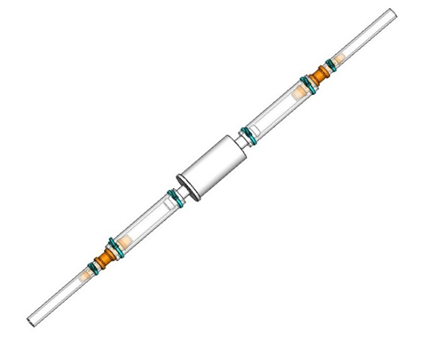
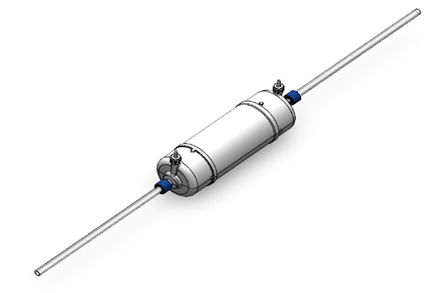
Integrating Multiple Components into a Reliable Fluid Path
A practical DFA principle for fluid management assemblies:
The fewer components, the better.
Simplicity creates benefits across the board:
- Fewer sourced components and suppliers
- Fewer assembly steps
- Fewer points of failure
- Less documentation burden
- Easier maintenance protocols
- More consistent flow performance
Additionally, consistency within the fluid path creates better flow. Every transition can increase head loss and disrupt flow. A cleaner, more consistent fluid path improves predictability and can reduce performance variability across builds.

Takeaway: Early Decisions Shape Device Success
Design for Assembly isn’t a “nice-to-have” in medical device development, it’s a risk-reduction strategy. When you involve your manufacturing partner early and share assembly context, you unlock opportunities to:
- Shorten development timelines
- Reduce rework and ECOs
- Simplify supply chain and documentation
- Improve assembly consistency and system reliability
Our recommendation at Saint-Gobain Medical: bring us in early. Especially for tubing-intensive systems and fluid-path assemblies. When we understand how our components interact within your equipment/assemblies, we can help you make better decisions sooner, with less risk later.

Optimize performance with integrated design


Understand key differences between silicone and thermoplastic tubing so you can choose the material that best fits your medical device’s needs.

